
CEO's review Q2 2025
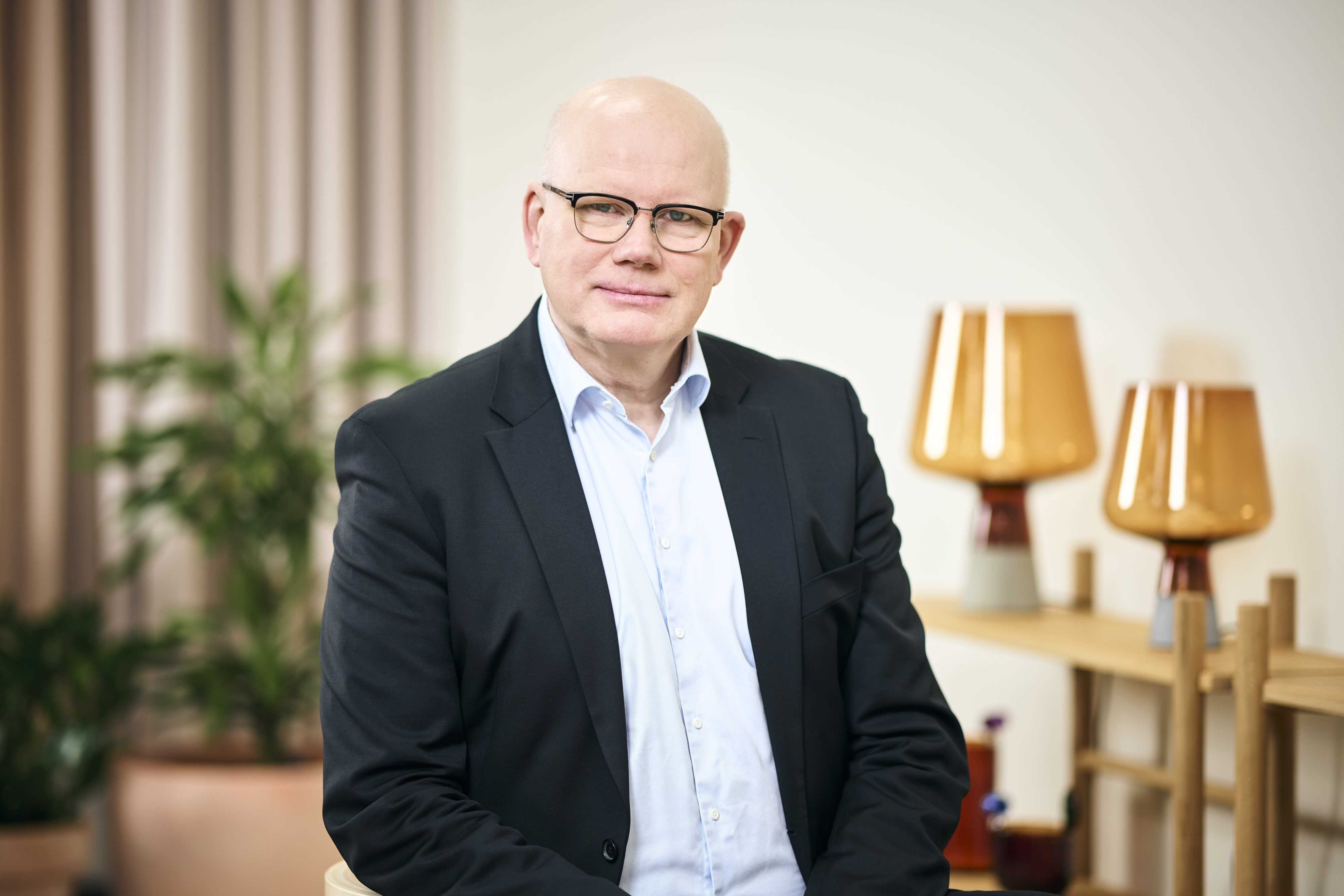
“The market environment in the second quarter was challenging and marked by tariff-driven uncertainty. The quarter’s comparable net sales decreased by 7%, and comparable EBIT declined markedly to EUR 3 million. This implies that we will not reach our long-term comparable net sales growth and comparable EBIT margin financial targets set in 2021 for the strategy period ending in 2025, as our focused efforts have been largely negated by external market pressures. In this highly tactical operating environment, we are focusing on actions that safeguard our market share and cash flow.
In June, we revised our guidance for 2025, now expecting comparable EBIT for the year to be in the range of EUR 90-110 million. As outlined in the profit warning, Fiskars Group has faced a rapid decline in U.S. retailer demand due to indirect impacts from tariffs. This sharp drop emerged abruptly in May-June 2025. We expect that our actions will over time largely mitigate adverse direct impacts of tariffs related to increasing sourcing and logistics costs. However, these benefits are expected to materialize from the second half of 2025 onwards. This means there will be a timing mismatch between the negative effects of the tariffs and when benefits from mitigation measures begin to take effect.
The U.S. is a particularly important market for Business Area (BA) Fiskars, representing approximately 50% of the BA’s net sales, the majority of which is based on sourcing from Asia. To safeguard long-term shelf-space with key retail partners in the U.S., BA Fiskars has carefully balanced short-term commercial gains with long-term market share. Our teams are working persistently to mitigate tariff impacts, and once the situation stabilizes, we will continue actions to rebase some of our sourcing to optimize our supply chain in the long term.
Business Area Fiskars’ comparable net sales in the second quarter decreased by 11% due to distribution losses in the U.S., as well as declines in Europe. One highlight was the continued good growth in Germany, which was supported by distribution gains and successful campaigns. Business Area Fiskars’ comparable EBIT decreased to EUR 14 million due to the decline in volumes, as well as the negative tariff impacts on comparable gross margin, which decreased by 150 bps to 39.1%. The decline was partially offset by prudent cost management.
Looking at Business Area Vita’s financials, its comparable net sales in the second quarter declined by 3%. A key driver of this decline was the weak performance of the Waterford brand, especially in the U.S. This is further intensified by the nature of Waterford’s crystal production, which operates with a process industry logic and is consequently challenging to scale down when volumes decline. BA Vita’s comparable EBIT declined to EUR -8 million, and its comparable gross margin declined by 410 bps to 54.7%. Some bright spots of the quarter were Moomin Arabia’s continued strong profitable growth as it celebrates Moomin’s 80th anniversary, as well as the good performances of our Nordic brands such as Arabia and Rörstrand.
I am pleased that we now have the leadership structure in place for both Business Areas: Dr. Steffen Hahn started as CEO of Fiskars in October 2024, and now during the second quarter of 2025, Daniel Lalonde assumed the role of CEO of Vita. With Daniel’s extensive experience and strategic insight, he is well positioned to capitalize on long-term growth opportunities for the Business Area. While the Business Areas already operate as independent subsidiaries with their own CEOs, our teams are working to finalize their separate legal entity structures. These are expected to be completed by the end of the first quarter of 2026, unlocking the possibility to offer further transparency into BA-specific financials.
Fiskars Group’s strategy is built on four transformation levers – commercial excellence, Direct-to-Consumer (DTC), the U.S., and China. Looking at the first half of 2025, our comparable gross margin, which is our key performance indicator for commercial excellence, decreased by 150 bps to 47.2%. Comparable DTC sales grew by 5%, particularly thanks to good growth in the Group’s retail network. Net sales in China increased by 4%, recovering especially during the second quarter. In the U.S., comparable net sales decreased by 4% in the first half of the year, as demand declined rapidly by 14% during the second quarter following a good start to the year.
Although the operating environment is currently highly dynamic, we continue to invest in demand creation to engage consumers. For instance, during the quarter, several of BA Vita’s brands participated in key design events, including Georg Jensen at Milan Design Week, and Royal Copenhagen and Iittala at 3daysofdesign in Copenhagen. These platforms provide valuable opportunities for our brands to engage with design-oriented consumers and connect with key current and prospective customers. Meanwhile, BA Fiskars continued its focus on delivering its innovation pipeline, including expansions to adjacent categories, as well as making strategic media investments for targeted exposure.
While visibility in the market remains exceptionally limited, we remain agile in navigating ongoing challenges in the short term while reinforcing our foundation.”
JYRI LUOMAKOSKI
Interim President & CEO